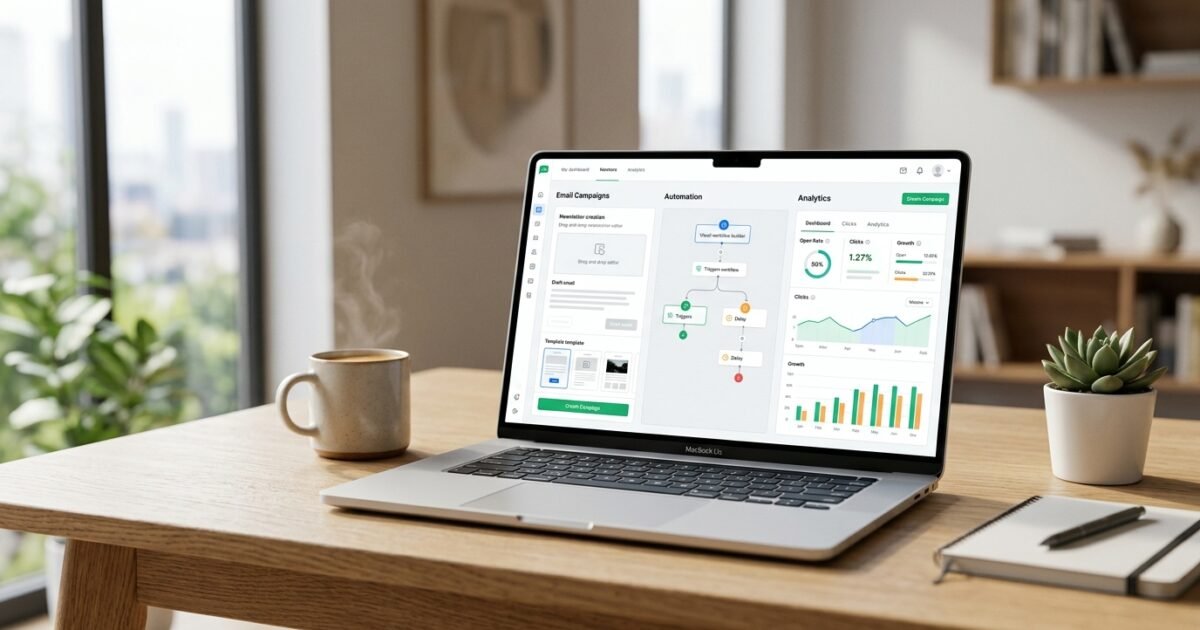
Marketing automation has transformed how businesses communicate with their audiences. Instead of manually sending every email, posting every social media update, or following up with every lead individually, automation lets you create systems that work continuously in the background, delivering the right message to the right person at the right time.
This guide explains what marketing automation is, why it matters, and how to implement it effectively in your business.
What is Marketing Automation?
Marketing automation is the use of software to automate repetitive marketing tasks and workflows. These tasks include sending emails based on triggers, segmenting contacts based on behavior, scoring leads based on engagement, nurturing prospects through sales funnels, and reporting on campaign performance.
At its core, marketing automation is about replacing manual, repetitive work with intelligent systems that operate based on rules you define. When a customer takes a specific action, such as signing up for a newsletter, abandoning a shopping cart, or visiting a pricing page, automation triggers a predetermined response without any manual intervention.
Why Marketing Automation Matters
The business case for marketing automation is compelling. Companies that use marketing automation see an average increase of 14.5 percent in sales productivity and a 12.2 percent reduction in marketing overhead. Automated emails generate 320 percent more revenue than non-automated emails. Lead nurturing through automation produces 50 percent more sales-ready leads at 33 percent lower cost.
Beyond the numbers, automation solves a fundamental scaling problem. A single marketing person can write and send maybe a few dozen personalized emails per day. With automation, that same person can set up workflows that deliver thousands of personalized messages based on individual subscriber behavior, preferences, and engagement history.
Essential Marketing Automations
Welcome Sequences
The welcome sequence is the first automation every business should implement. When someone joins your email list, they automatically receive a series of emails over the next one to two weeks. This sequence introduces your brand, delivers any promised resources, shares your best content, builds trust, and gradually introduces your products or services. Welcome emails have open rates two to three times higher than regular campaigns, making this the highest-impact automation you can create.
Lead Nurturing Workflows
Not every person who encounters your brand is ready to buy immediately. Lead nurturing automations guide prospects through the awareness, consideration, and decision stages of the buying journey. Based on their interactions with your content, website, and emails, the automation delivers increasingly relevant content that moves them closer to a purchase decision.
Abandoned Cart Recovery
For ecommerce businesses, abandoned cart emails are among the most profitable automations. Approximately 70 percent of online shopping carts are abandoned before checkout. A well-timed sequence of three emails sent at one hour, 24 hours, and 48 hours after abandonment can recover 10 to 15 percent of those lost sales.
Customer Onboarding
After a customer makes a purchase, onboarding automations help them get the most value from your product or service. These sequences provide setup guides, tips, best practices, and support resources, reducing churn and increasing customer lifetime value.
Re-engagement Campaigns
Subscribers who stop engaging with your emails drag down your deliverability metrics. Re-engagement automations target inactive subscribers with compelling messages designed to rekindle interest. If they remain unresponsive after several attempts, the automation can remove them from your active list, keeping your engagement rates healthy.
Building Effective Automation Workflows
Successful automation begins with clearly defined goals. Before building any workflow, answer these questions: What specific outcome do you want this automation to produce? Who is the target audience for this workflow? What triggers will start the automation? What actions should occur at each step? How will you measure success?
Keep your workflows simple initially. Start with linear sequences (a series of emails sent at defined intervals) before attempting complex branching logic. As you collect data on how subscribers interact with your automation, you can add conditional logic that personalizes the journey based on individual behavior.
Always include exit conditions in your workflows. If a subscriber achieves the goal of the automation (for example, they make a purchase), they should exit the workflow immediately rather than continuing to receive nurturing messages that are no longer relevant.
Segmentation and Personalization
The power of marketing automation multiplied when combined with effective segmentation. Instead of sending the same message to everyone, segment your audience based on demographics, behavior, purchase history, engagement level, and expressed interests. Then create targeted automations for each segment.
Personalization goes beyond inserting a first name into the subject line. True personalization means delivering content, offers, and recommendations that are genuinely relevant to each individual based on their unique characteristics and behavior. Automated systems make this level of personalization scalable.
Measuring Automation Performance
Track these key metrics for each automation workflow: entry rate (how many people enter the automation), completion rate (how many complete the full sequence), conversion rate (how many achieve the desired goal), revenue generated, and time to conversion. Compare these metrics against your manual campaigns to quantify the impact of automation on your business.
Review and optimize your automations quarterly. Update content that feels stale, adjust timing based on engagement data, and test new approaches to continuously improve performance.
Getting Started with Marketing Automation
You do not need an enterprise budget to benefit from marketing automation. Many email marketing platforms include automation features in their free or entry-level plans. Start with a welcome sequence, add one or two additional automations as you learn, and gradually build a comprehensive automation system that handles the repetitive work while you focus on strategy and creativity.
Disclaimer: This article is for educational purposes. Product references are independent assessments.
Ready to Get Started?
Try the top-rated email marketing platform free. No credit card required.
Start Free Trial →Affiliate link — we may earn a commission at no extra cost to you. Learn more
Editorial Independence: Our content is based on independent research and testing. We are not affiliated with any software company. When you purchase through our links, we may earn a commission, but this never influences our recommendations. Read our editorial policy